Bishop's Palace of the Eparchy of Banat
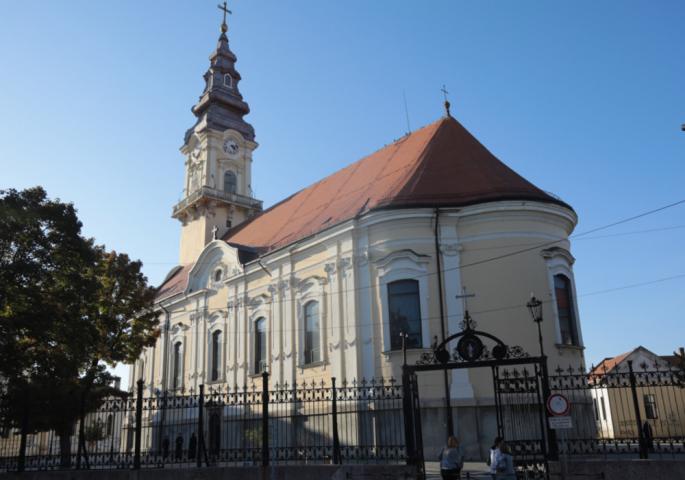
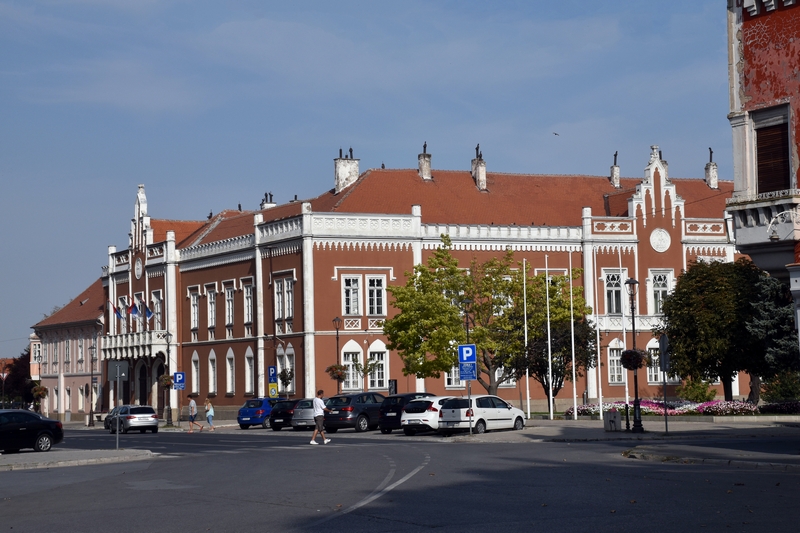
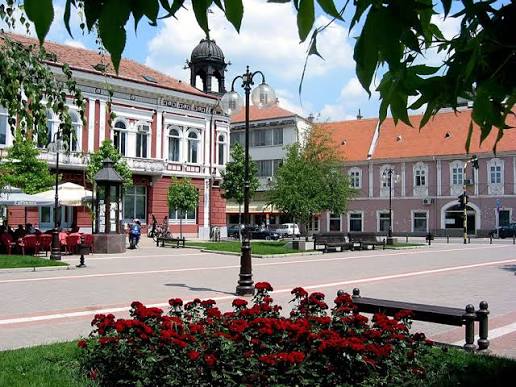
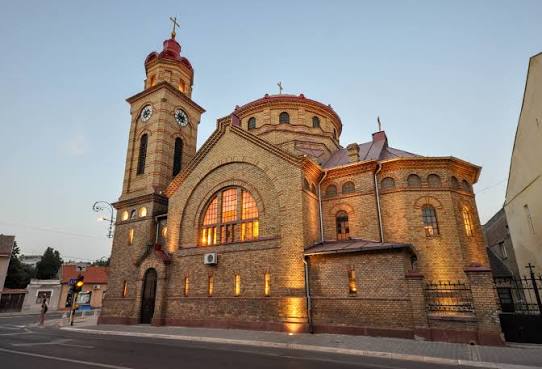
The Bishop's Palace in Vršac, built between 1756 and 1763, is one of the finest examples of Serbian Baroque architecture and the headquarters of the Serbian Orthodox Eparchy of Banat. Over the centuries, the palace underwent several architectural transformations, acquiring its richly decorated façade and three distinctive domes in the early 20th century. Inside is a chapel dedicated to the Holy Archangels Michael and Gabriel, featuring an iconostasis painted by Nikola Nešković and the revered icon of the Mother of God of Vinča–Bezdin. Protected as a cultural monument of exceptional importance, the palace is one of Vršac's most impressive architectural landmarks. Although not open for regular tourist visits, its magnificent exterior can be admired from Dvorska Street.
Not open to the public for tourist visits
The story of this place
Located at 20 Dvorska Street, in the historic centre of Vršac, the Bishop's Palace is one of Serbia's most remarkable ecclesiastical residences. Surrounded by greenery and distinguished by its elegant façade and decorative domes, this monumental building has served as an important centre of Orthodox religious life in Banat for more than two and a half centuries. Today, the palace houses the headquarters of the Serbian Orthodox Eparchy of Banat and enjoys the status of a cultural monument of exceptional importance. Origins in the 18th Century The history of the Bishop's Palace is closely connected with the relocation of the Orthodox episcopal seat from Caransebeș, in present-day Romania, to Vršac in the mid-18th century. Under the leadership of Bishop Jovan Georgijević, and with financial contributions from local benefactors, construction began on a prestigious residence intended for the bishops of Vršac. The foundation stone was solemnly blessed on 8 May 1757, and the building was completed in 1763. The palace was conceived as a monumental residence reflecting the importance of the Orthodox Church and its spiritual authority in the Banat region. Its construction marked a significant development in Serbian ecclesiastical architecture within the Habsburg Monarchy. From Baroque Architecture to Its Present Appearance The original palace was designed in the Baroque style, featuring a symmetrical façade and impressive reception rooms arranged across two floors. During the 19th century, the building underwent substantial modifications. Its first major reconstruction took place between 1833 and 1843, during the episcopate of Josif Rajačić, when elements of the Biedermeier style were introduced. The most significant changes to its exterior occurred in the early 20th century under Bishop Gavrilo Zmejanović. The façade received richer decorative elements, while the roof was partially redesigned with the addition of three distinctive domes. This transformation, inspired by the eclectic architectural style popular at the time, gave the palace the elegant and ceremonial appearance that visitors admire today. The Palace Chapel and Its Valuable Iconostasis One of the palace's greatest treasures is its private chapel, dedicated to the Holy Archangels Michael and Gabriel. The chapel contains an exceptional 18th-century iconostasis painted by Nikola Nešković, one of the most important Serbian artists of his time and a prominent representative of Baroque religious painting. The iconostasis is particularly valuable for its artistic quality and influences from Ukrainian Baroque traditions. Together with other religious artworks preserved in the chapel, it provides a remarkable insight into the development of Serbian Orthodox art in Banat. The Miraculous Icon of the Mother of God of Vinča–Bezdin Among the most revered religious treasures preserved in the palace is the icon of the Mother of God of Vinča–Bezdin. According to Orthodox tradition, the icon was protected by Serbian monks and transferred from Vinča Monastery to Bezdin Monastery, located in present-day Romania. It was later brought to Vršac, where it is preserved in the palace chapel. The icon holds profound spiritual significance for Orthodox believers and represents an important part of the religious heritage of the Eparchy of Banat. Art Collections and Historical Library Beyond its architectural significance, the Bishop's Palace preserves valuable cultural and historical collections. These include portraits of bishops, religious icons, ecclesiastical objects and examples of decorative art from different historical periods. The palace library contains manuscripts and printed books, including valuable 18th-century editions. Together, these collections illustrate the important educational, artistic and spiritual role played by the bishops of Vršac throughout history. A Witness to Banat's Changing History During its more than 250 years of existence, the palace has witnessed major political, social and religious transformations. Under Habsburg rule, it served as an important centre of Orthodox religious life, while during the 19th century it was closely associated with the development of Serbian cultural and educational institutions. In 1932, following the reorganisation of Orthodox church administration, Vršac became the headquarters of the unified Eparchy of Banat, further strengthening the palace's significance. After the Second World War, part of the original palace park was used for urban development and the expansion of the city centre. Despite these changes, the building has retained its historical character and remains one of the most important symbols of Orthodox heritage in Banat. An Architectural Landmark of Vršac The Bishop's Palace stands opposite the Serbian Orthodox Cathedral of Saint Nicholas, in the heart of the city's historic district. Its richly decorated façade, distinctive domes and landscaped surroundings make it one of the most photogenic historical buildings in Vršac. The palace is officially protected as a cultural monument of exceptional importance, reflecting its outstanding architectural, artistic and historical value. Why Visit the Bishop's Palace? Although the interior is not open for regular tourist visits, the palace remains an essential stop when exploring the architectural heritage of Vršac. Visitors can admire its magnificent exterior from Dvorska Street and discover an important chapter of Banat's religious and cultural history. Its central location makes it easy to combine with a visit to the nearby Cathedral of Saint Nicholas and other historic attractions. The Bishop's Palace is more than an episcopal residence – it is a remarkable testament to centuries of history, spirituality and artistic achievement, and one of the most valuable architectural treasures of Vršac.
Photos
7 ukupnoFacilities and amenities
Amenities have not been added yet.
Reviews
How was your visit? Share your personal experience.
This place has no published reviews yet.
Questions and answers
Know something useful? Join in.
No published questions yet. Ask what you would like to know.
Explore more
Related categories for your next discovery.