Saint Nicholas Orthodox Cathedral
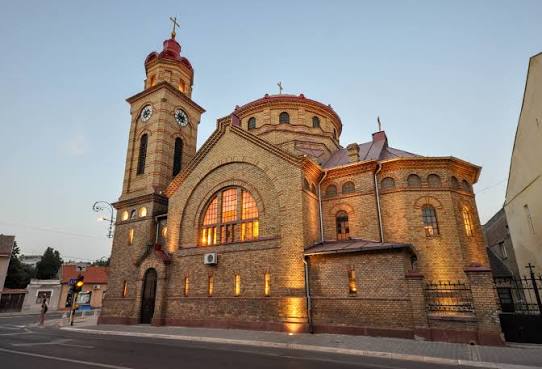
Saint Nicholas Orthodox Cathedral, also known as the Great Church, is the principal Serbian Orthodox church in Vršac and one of the most important examples of Baroque religious architecture in Banat. Built between 1783 and 1785, it stands in the historic centre of the city, opposite the Bishop's Palace. Its magnificent interior features an elaborate iconostasis, valuable icons and religious paintings, including two remarkable works by the celebrated Vršac-born artist Paja Jovanović: “Saint Nicholas Saves the Condemned” and “Saint Angelina”. With its 54-metre-high bell tower, the cathedral is a distinctive architectural landmark and an important centre of Orthodox spiritual life in Banat.
The story of this place
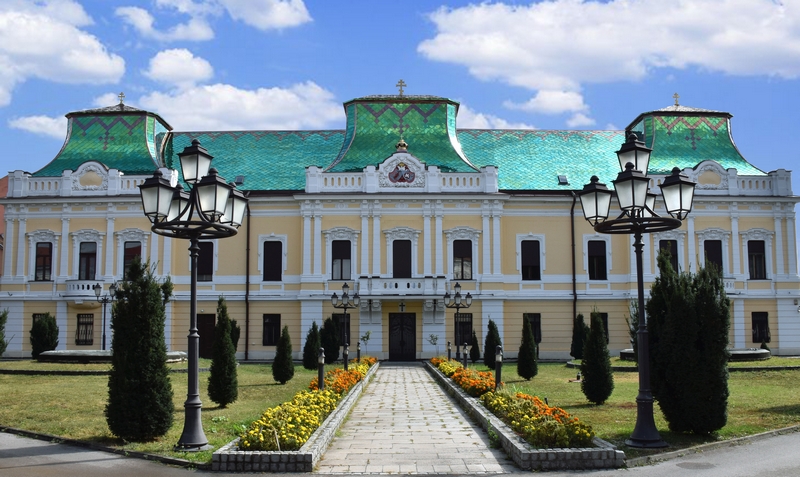
In the historic centre of Vršac, opposite the magnificent Bishop's Palace, stands Saint Nicholas Orthodox Cathedral, affectionately known to local residents as the Great Church. This impressive Serbian Orthodox cathedral is one of the most significant examples of Baroque religious architecture in Banat and has occupied a central place in the city's religious, cultural and social life for more than two centuries. Dedicated to Saint Nicholas, one of Christianity's most revered saints, the cathedral is the principal church of the Serbian Orthodox Eparchy of Banat. The History of the Cathedral The present cathedral was built on the site of an older Orthodox church during a period of significant economic, cultural and urban development in Vršac. Construction began in 1783 and was completed in 1785. The new church was solemnly consecrated on 21 October 1785 by Bishop Vikentije Popović of Vršac. The construction of such a monumental building was a major undertaking for the local Orthodox community and reflected its growing spiritual and economic importance. From the beginning, the cathedral was intended to be a prestigious religious landmark worthy of Vršac's position as an important Orthodox centre in Banat. Baroque Architecture and the Monumental Bell Tower Saint Nicholas Cathedral was designed in the Baroque style with Neoclassical elements, reflecting architectural traditions widespread throughout the Habsburg Monarchy in the late 18th century. The building measures approximately 48 metres in length and 17 metres in width, while its bell tower reaches a height of 54 metres. Its harmonious proportions, tall windows, decorative façade and impressive tower give the cathedral its distinctive appearance. An unusual feature of the bell tower is its narrow terrace, which adds to the architectural character of the building. Together with the neighbouring Bishop's Palace, the cathedral forms one of the most important historical and architectural ensembles in Vršac. The Magnificent Iconostasis and Religious Art One of the cathedral's greatest treasures is its richly decorated iconostasis, an outstanding example of Serbian Orthodox religious art from the early 19th century. The intricate woodcarving was completed in 1805 by Aksentije Marković of Novi Sad, while the icons were painted between 1805 and 1807 by Pavle Đurković. The iconostasis underwent later restoration, including significant work carried out between 1865 and 1868 by the painter Laufer. The cathedral's artistic heritage also includes wall paintings associated with Simeon Jakšić and Mihailo Popović. A collection of devotional icons by Nikola Nešković, one of the most important Serbian painters of the 18th century, further enriches the interior. Together, these works make the cathedral a remarkable treasury of Serbian religious painting and craftsmanship. Two Masterpieces by Paja Jovanović Among the cathedral's most valuable artworks are two paintings donated by Paja Jovanović, one of Serbia's most celebrated artists, who was born in Vršac in 1859. The paintings are titled “Saint Nicholas Saves the Condemned” and “Saint Angelina”. The first depicts an episode from the life of Saint Nicholas, who, according to Christian tradition, intervened to prevent the unjust execution of innocent people. The second is dedicated to Saint Angelina Branković, an important figure in Serbian Orthodox history. These paintings establish a special connection between the cathedral and Vršac's artistic heritage, making the church particularly appealing to visitors interested in fine art. Burial Place of the Bishops of Vršac The cathedral also holds great historical importance as the burial place of several bishops who served in Vršac and Banat. Among those interred in the burial vaults are Josif Jovanović Šakabenta, Petar Jovanović Vidak, Emilijan Kengelac, Nektarije Dimitrijević, Georgije Letić, Vikentije Vujić and Visarion Kostić. Their tombs provide a lasting reminder of the cathedral's central role in the history of Orthodox church administration in Banat. Historic Books and Ecclesiastical Treasures In addition to its artworks, the cathedral preserves valuable religious books and historical objects. Particularly important are two historic Gospel books. One was printed in Moscow in 1762 and donated by Aleksije Nikolić, while the other was presented to the church by Bishop Jovan Georgijević. The oldest surviving parish register associated with the cathedral dates from 1767, providing an important source for studying the history of the local population. These collections reflect the long-standing traditions of education, literacy and spiritual culture among Orthodox communities in Banat. Restoration and Preservation Throughout its history, Saint Nicholas Cathedral has undergone several major restorations. Important repairs were carried out in the early 20th century, followed by further work in the mid-20th century and in 1968. One of the most extensive modern renovations took place between 2003 and 2007. The works included replacing the roof covering, restoring the façade, upgrading electrical installations, installing underfloor heating and laying new granite flooring. These improvements helped preserve the cathedral's historical appearance while ensuring its continued use as an active place of worship. The Spiritual Heart of Banat Saint Nicholas Cathedral remains an important centre of religious life within the Serbian Orthodox Eparchy of Banat. Regular services, solemn liturgies and major religious celebrations take place here throughout the year. The cathedral celebrates its patron saint on 19 December, the feast of Saint Nicholas according to the Serbian Orthodox calendar. Together with the Bishop's Palace, it forms the historical and spiritual heart of Orthodox Vršac. Why Visit Saint Nicholas Cathedral? The cathedral is an essential destination for visitors interested in the history, architecture and artistic heritage of Vršac. Its monumental appearance, magnificent iconostasis, valuable religious icons and paintings by Paja Jovanović make it one of the city's most important cultural landmarks. Located in the historic centre, it can easily be visited alongside the Bishop's Palace, the City Museum and other nearby attractions. Saint Nicholas Orthodox Cathedral is more than a place of worship – it is a living monument to history, art and spirituality, and one of the most recognisable symbols of Vršac.
Photos
8 ukupnoFacilities and amenities
Amenities have not been added yet.
Reviews
How was your visit? Share your personal experience.
This place has no published reviews yet.
Questions and answers
Know something useful? Join in.
No published questions yet. Ask what you would like to know.
Explore more
Related categories for your next discovery.