Greek Catholic Church of the Holy Trinity
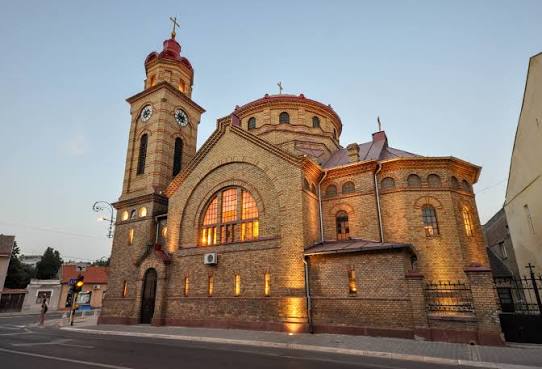
The Greek Catholic Church of the Holy Trinity in Vršac is a remarkable example of the city's religious and cultural heritage. Built in 1932 as an Evangelical Lutheran church, this distinctive red-brick building now serves the Greek Catholic community, predominantly of Romanian heritage. Following restoration, the church was officially blessed and reopened on 13 October 2018. Today, it stands as a testament to the multicultural history of Vršac and the centuries-long coexistence of different peoples and religious traditions in Banat.
Free admission – please confirm before visiting
The story of this place
Located on Gavrila Principa Street in Vršac, the Greek Catholic Church of the Holy Trinity is a fascinating religious landmark whose history reflects the rich multicultural and multiconfessional heritage of the Banat region. Originally built for the Evangelical Lutheran community, the church now serves as a spiritual centre for Greek Catholic believers, particularly members of the local Romanian community. From a Lutheran Church to a Greek Catholic Place of Worship The Evangelical community in Vršac became organised in the mid-19th century, primarily among residents of German and Hungarian descent. An Evangelical congregation was established in 1854, followed in 1868 by the founding of the Gustav Adolf Society, named after the Swedish king remembered as a protector of Protestant communities. Initially, religious services were held in private premises, including a house at the corner of today's Svetozara Miletića and Sinđelićeva streets. It was not until the early 1930s that the congregation raised sufficient funds to construct its own church. The foundation stone was laid on 23 August 1931, and construction was completed on 13 November 1932. The new church was named the Gustav Adolf Church. Distinctive Red-Brick Architecture Unlike the monumental churches that dominate the Vršac skyline, this building is characterised by modest dimensions, harmonious proportions and simple architecture. Constructed from distinctive red brick, the church is an example of Protestant religious architecture from the interwar period. Its original interior was modest, furnished with pews and largely free of elaborate decoration, reflecting the Lutheran tradition of worship. This architectural simplicity creates an interesting contrast with the Baroque Orthodox churches and the Neo-Gothic Roman Catholic landmarks found elsewhere in Vršac. A New Chapter in 2018 Following the Second World War and major demographic changes, the city's former Evangelical community almost disappeared, and the church lost its original function. Decades later, the building was restored and adapted for Greek Catholic worship. On 13 October 2018, the Church of the Holy Trinity was solemnly blessed in a ceremony attended by church dignitaries, believers and guests from Serbia and Romania. The ceremony was led by Alexandru Mesian, the Greek Catholic Bishop of Lugoj, with the participation of Bishop Đura Džudžar and the Roman Catholic Bishop of Zrenjanin, Ladislav Nemet. The restoration preserved the building's recognisable exterior while adapting its interior to the liturgical requirements of the Byzantine Rite. The Greek Catholic Community in Banat Greek Catholics belong to the Catholic Church and recognise the Pope as its supreme spiritual leader, while preserving the Eastern Byzantine liturgical tradition. Consequently, their churches, icons and religious ceremonies differ in several respects from those of Roman Catholics and share many features with Eastern Orthodox worship. In Vršac and the surrounding area, the Greek Catholic community consists predominantly of believers of Romanian heritage. The restoration of the church provided this community with its own place for worship and gatherings, strengthening the preservation of its cultural and spiritual identity. Why Visit the Church of the Holy Trinity? Visiting this church offers an opportunity to discover a lesser-known chapter of Vršac's history and understand how different religious communities have shaped the city's appearance and identity. Its transformation from a Lutheran church into a Greek Catholic place of worship, its understated red-brick architecture and its importance to the local Romanian community make it a worthwhile stop when exploring the cultural and historical landmarks of Vršac. The Greek Catholic Church of the Holy Trinity stands as a testament to religious coexistence, historical change and the rich cultural heritage of Banat.
Photos
4 ukupnoFacilities and amenities
Amenities have not been added yet.
Reviews
How was your visit? Share your personal experience.
This place has no published reviews yet.
Questions and answers
Know something useful? Join in.
No published questions yet. Ask what you would like to know.
Explore more
Related categories for your next discovery.